B2B Marketing Digest - February 2026

Dear Reader,
Welcome to the second B2B Marketing Digest of 2026.
I hope the year has started gently for you.
For me, the first weeks of 2026 have been very practical: compliance questions, platform changes, and the quiet realization that doing more isn’t the answer anymore.
That’s why this edition includes reminders around regulation, data, and focus.
I’d genuinely love to hear how the year has started for you.
Feel free to write back; your perspective often shapes what comes next.
Warm regards,
Kristīne
Hot Updates
Meta Tests Premium Subscriptions for Creators & Power Users
Meta is preparing to roll out premium subscription features for Instagram, Facebook, and WhatsApp that offer enhanced AI-driven tools, audience insights and advanced capabilities, while core services remain free.
What this means for B2B marketers: This signals a shift toward monetised premium engagement tools. Brands may get new ways to test features or improved analytics depending on the subscription tier.
Social Media Trends Seen in Early 2026
Video remains the dominant engagement format across TikTok, Instagram Reels, YouTube Shorts and even LinkedIn, video continues to be the leading content trend in 2026..
What this means for B2B marketers: Short-form and visual storytelling continues to outperform static content for reach and engagement across audiences.
LinkedIn’s algorithm is changing. Rather than rewarding “tricks,” it now prioritizes profile authority, consistency, and long-term value. Here’s the latest from platform research and expert insights:
1. Profile signals determine distribution: LinkedIn’s updated relevance model (“360 Brew”) evaluates your: Headline, About section, Experience, Posting history, before deciding who sees your content. Posts that don’t match your declared expertise get limited reach.
Direction: Align your profile language with the topics you create most often. (Source: LinkedIn algorithm insights, 2026 trend reporting)
2. Saves matter more than likes: When someone bookmarks (saves) your post, LinkedIn treats that as a strong signal of value.
Saves correlate with: deeper engagement, continued visibility, longer-tail distribution.
Direction: Create content people want to reference later: frameworks, checklists, and structured insights.
3. Consistency > timing: There is no single best time to post. Instead, predictable rhythm matters: regular cadence, repeatable topics, audience expectation. Random posting reduces visibility because the algorithm learns less about what you stand for.
Direction: Pick a schedule you can maintain (e.g., 2–3 posts/week) and stick with it.
4. Polls are reach tools, but not conversion tools: Polls do generate high reach, but: they rarely build followers, they don’t build trust
and they don’t associate your content with expertise topics
Direction: Use polls occasionally for audience insight.
5. Carousel performance requires completion LinkedIn now penalizes carousels with low completion rates: ideal length: 8–10 slides, clear story or progression, no filler slides.
Direction: Keep slides tight, visual, and purposeful.
What`s worth reconsidering: Hashtag stuffing- LinkedIn categorizes by text content, not tags. Hiding links in first comments, links can go in the post body. Random topics- inconsistent topic signals reduce reach.
In a few words
Harmonize your profile with your content topics
Create save-worthy posts (frameworks, guides, checklists)
Post predictably- regular cadence, repeatable themes
Feature Insight
Email in 2026: From Broadcast Channel to Strategic Asset
Email remains one of the most stable channels in a volatile marketing landscape, but how teams use it is changing fast.
Recent industry data shows email is becoming more intelligent, selective, and high-trust:
AI is moving inside email platforms, helping teams analyze performance, identify patterns, and optimize campaigns faster, shifting optimization from guesswork to evidence-based decisions.
Unsubscribes are rising slightly, but engagement is improving. Easier opt-outs mean smaller, healthier lists that actually read and click.
Deliverability standards are tightening. Authentication, sender reputation, and list hygiene are no longer “best practices”, they are baseline requirements. Some of the standards were included in 2025 November’s Digest: Email Deliverability 2026 (prepping for Gmail/Outlook changes)
Email is increasingly seen as the last truly owned connection with audiences, as social platforms continue to limit organic reach.
Data points to note (2025–2026):
Over 4.6 billion people use email daily worldwide (Statista, 2025).
Email still delivers one of the highest ROI ratios, with multiple studies estimating $36–$42 return per $1 spent (Litmus / DMA benchmarks).
Google and Microsoft have both tightened sender requirements, pushing brands toward cleaner lists and higher-quality content.
For B2B marketers, this means:
Email is a long-term trust and ownership strategy. Teams that treat email as a strategic asset (not a promotional blast) are better positioned for signal loss, platform shifts, and AI-driven discovery.
C-Suite & Leadership Corner
The Quiet Rise of Strategic Minimalisms
In 2026, the leadership advantage is about choosing better. As complexity, AI output, and pressure increase, strategic minimalism is emerging as a quiet but powerful response. This article explores why focus, consistency, and intentional restraint are becoming the new C-suite advantage. What strategic minimalism looks like in practice?
Tools & Tactics
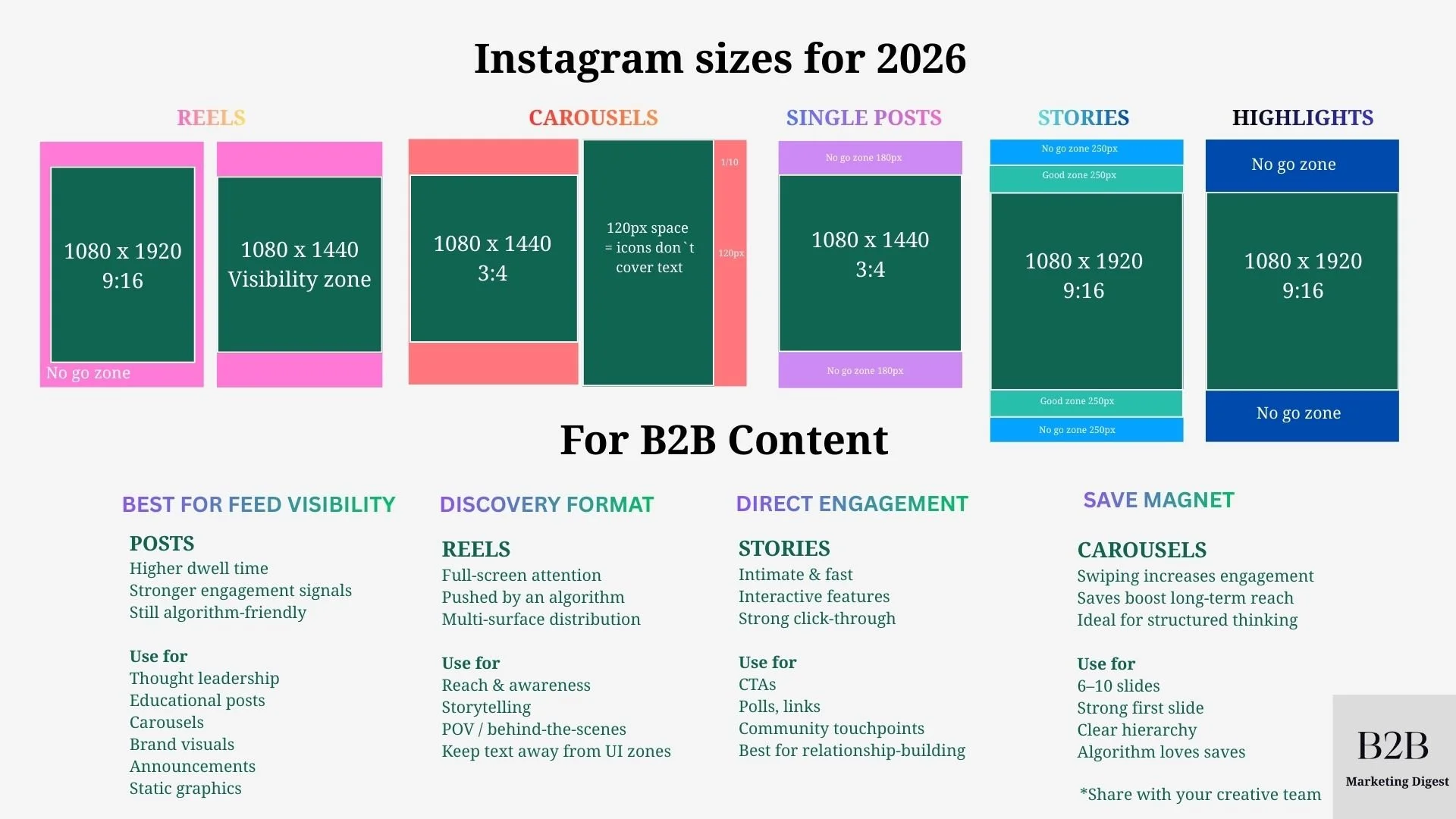
Instagram Tactics in 2026
Deep Dive Articles:

Trust Will Be Measured Before Conversion
In B2B, buyers don’t start trusting when they’re ready to buy; they buy because they already trust. Here’s why consistency and credibility matter more than ever in 2026.

Why Email Is Still the Closest Relationship You Own in Marketing
Email remains the closest relationship a brand can own in marketing, not because it’s old, but because it’s intentional.
This article explores why email matters more than ever.
Quick Hits
AI Is Reshaping Data Privacy & Governance
AI is driving major shifts in how companies protect and govern data. 90 % of organizations say AI is the primary reason they are expanding privacy programs. Almost all firms report better customer trust and innovation when strong privacy frameworks are in place, but only ~12 % feel their governance is mature. This means B2B teams must treat privacy and data stewardship as strategic priorities, check the critical shifts in this year: Regulation & Risk: AI + Data Compliance in 2026
Future Signal
You choose- the most critical topics for you will be included in the next series. Leave the topic here.
Closing Note
Forward this Digest to a colleague or comrade who’d benefit. 🤍 Join the access list
Be With Us:
© 2026 B2B Marketing Digest. All rights reserved.
This newsletter is provided for informational and educational purposes only. It does not constitute professional advice and should not be relied upon as such. All opinions expressed are those of the editor/author and/or co authors. You are receiving this email because you signed up via the website. If you no longer wish to receive the Digest, you can unsubscribe or update your preferences at any time by messaging “unsubscribe” to received email. We respect your privacy and comply with GDPR. Your information is stored securely and will never be sold or shared with third parties. See our Privacy Policy here.
